Most first-time visitors to Bali never make it past Seminyak, Uluwatu, or the reefs off Nusa Penida. But tucked away on the island’s remote northwest coast, inside the boundaries of West Bali National Park, lies a small uninhabited island that many divers quietly consider the best snorkeling spot in all of Bali: Menjangan Island.
No beach clubs. No crowds. No jet skis. Just some of the healthiest coral reefs left on the island, wild deer wandering an empty shoreline, and water so clear you can see 20-30 meters down on a good day.
Where is Menjangan Island?
Menjangan Island sits just off Bali’s northwest tip, inside West Bali National Park (Taman Nasional Bali Barat) — a protected area covering roughly 190 square kilometers of rainforest, mangrove, savanna, and coastline. The island itself is uninhabited, which is exactly why it’s stayed so untouched: no resorts, no beach vendors, no development of any kind is allowed inside the park boundaries.
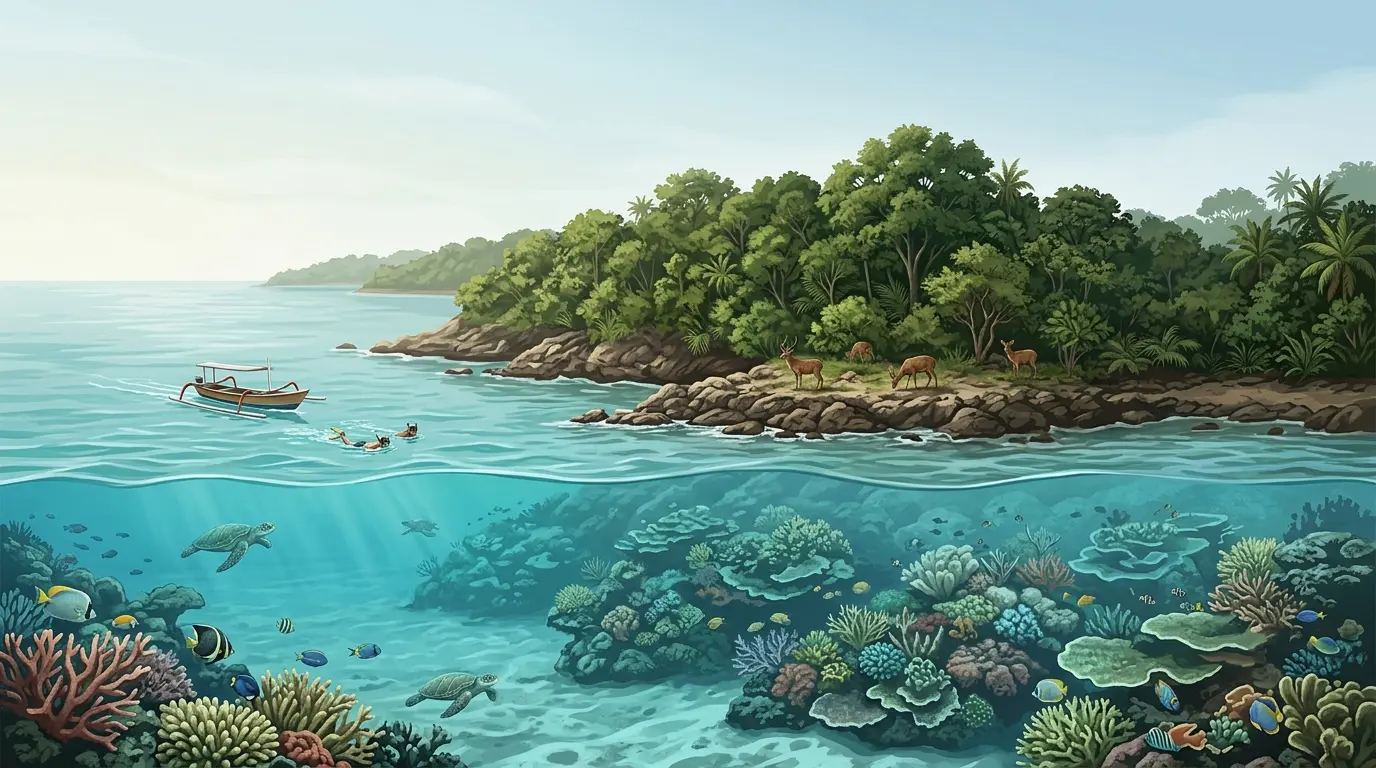
Its name comes from the local word for deer — menjangan — a nod to the small population of wild deer that roam the island. They’ve likely been swimming across from the Bali mainland for generations, and while they’re used to visitors, they’re still wild animals, so feeding them is discouraged.
Why Menjangan Island Is Different
Most of Bali’s popular dive and snorkel spots (think Nusa Penida or the reefs around Sanur) see a steady stream of daily boat traffic. Menjangan is different simply because it’s harder to reach — and that effort is what has kept the reefs intact.
Because the island falls entirely within a national park, strict conservation rules apply. The result is a marine environment that divers often describe as one of the healthiest left in Bali: dramatic coral walls, drop-offs reaching depths of up to 60 meters, and visibility that regularly holds at 20 meters or more, sometimes touching 30.
What You’ll See Underwater
The reefs around Menjangan Island support a genuinely impressive range of marine life for such a small area:
- Coral walls and drop-offs — steep underwater cliffs covered in soft and hard coral, popular with more experienced divers
- Sea turtles, gliding calmly along the reef edges
- Reef sharks, occasionally spotted along the deeper walls
- Clownfish, parrotfish, and other reef fish in the shallower coral gardens, perfect for snorkelers
- Nudibranchs and pygmy seahorses for macro photography enthusiasts
- Occasional sightings of dolphins, flying fish, and — on rare, lucky days — whale sharks
There are multiple named dive and snorkel sites around the island, ranging from shallow coral gardens suitable for beginners to steep wall dives that require a PADI certification. If you’re not a certified diver, don’t worry — the shallow snorkeling spots here are just as rewarding, and no certification is needed to get in the water with a mask and fins.
How to Get to Menjangan Island
Getting to Menjangan takes a bit more planning than a typical Bali day trip, which is part of why it stays uncrowded.
- Travel to West Bali National Park. From the main tourist hubs of Seminyak, Ubud, or Kuta, expect around 3-4 hours of driving each way. Most travelers either hire a private car and driver for a long day trip, or base themselves overnight closer to the area.
- Stop at Labuhan Lalang or Teluk Terima Beach. These are the two departure points for boats to the island, and where you’ll pay the national park entrance fee at the ranger office.
- Take a short boat ride. The crossing to Menjangan Island itself takes roughly 20-30 minutes.
Alternatively, many travelers base themselves in Pemuteran, a quiet fishing village on the coast that acts as the main gateway to the island. Pemuteran is worth a visit in its own right — it’s home to the Biorock project, one of the largest artificial coral reef restoration programs in the world, run by local dive operators as a community conservation effort.
Entrance costs typically include a national park fee (with a slightly higher rate on weekends) plus a small additional charge for divers. Boat charters and snorkeling gear rental are usually arranged locally or included in a tour package. Prices do change over time, so it’s worth checking current rates with a local operator before you go.
Best Time to Visit
Menjangan’s sheltered bay keeps conditions relatively stable year-round, but there are two rough seasons to know:
- April to November (dry season) — calm seas, the clearest visibility, and the most vibrant coral colors. This is generally considered the best window to visit.
- December to March (wet season) — still perfectly diveable and snorkel-friendly, though visibility can drop slightly during occasional rain.
Either way, arriving earlier in the day tends to mean calmer water and better light for underwater photography.
Tips for Visiting Responsibly
Because Menjangan Island sits inside a protected national park, a few simple rules help keep it that way:
- Don’t touch or stand on the coral, even accidentally — reef contact is one of the biggest threats to these ecosystems
- Don’t feed the wild deer on the island
- Take all your trash back with you — there are no bins on the island itself
- Choose a local, reef-conscious tour operator, ideally one connected to the Pemuteran conservation community
What to Pack
Menjangan is a full-day, water-heavy trip with long stretches on a boat and multiple swims, so pack light but smart:
- A rash guard or reef-safe sunscreen (regular sunscreen can damage coral)
- Your own mask and snorkel if you have one, though gear is usually available for rent
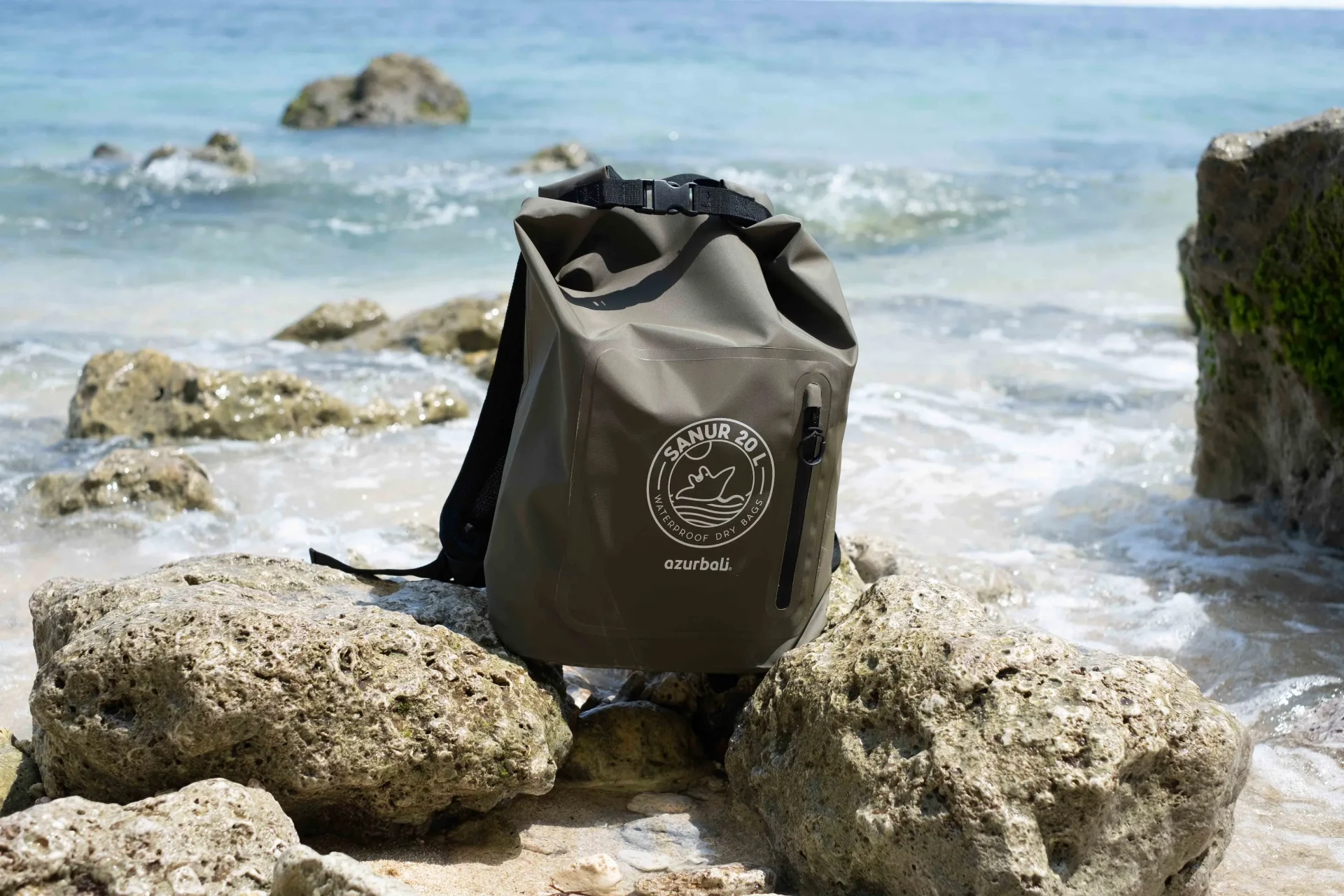
- A waterproof dry bag to protect your phone, camera, and other essentials during the boat ride and swims — the crossing can get splashy, and there’s nowhere dry to leave your belongings once you’re on the water
- A change of clothes for the long drive back
Final Thoughts
Menjangan Island isn’t the easiest place to reach in Bali, and that’s exactly the point. If you’re willing to trade a few extra hours in the car for reefs that most tourists never see, it’s one of the most rewarding day trips the island has to offer — and a rare chance to experience Bali’s underwater world the way it looked before the crowds arrived.